Global Healthcare Knowledge Graph Market 2026 – 2035
Report Code
HF1168
Published
August 3, 2026
Pages
220+
Format
PDF, Excel
Revenue, 2026
1.10 Billion
Forecast, 2035
2.26 Billion
CAGR, 2026-2035
8.3%
Report Coverage
Global
Market Overview
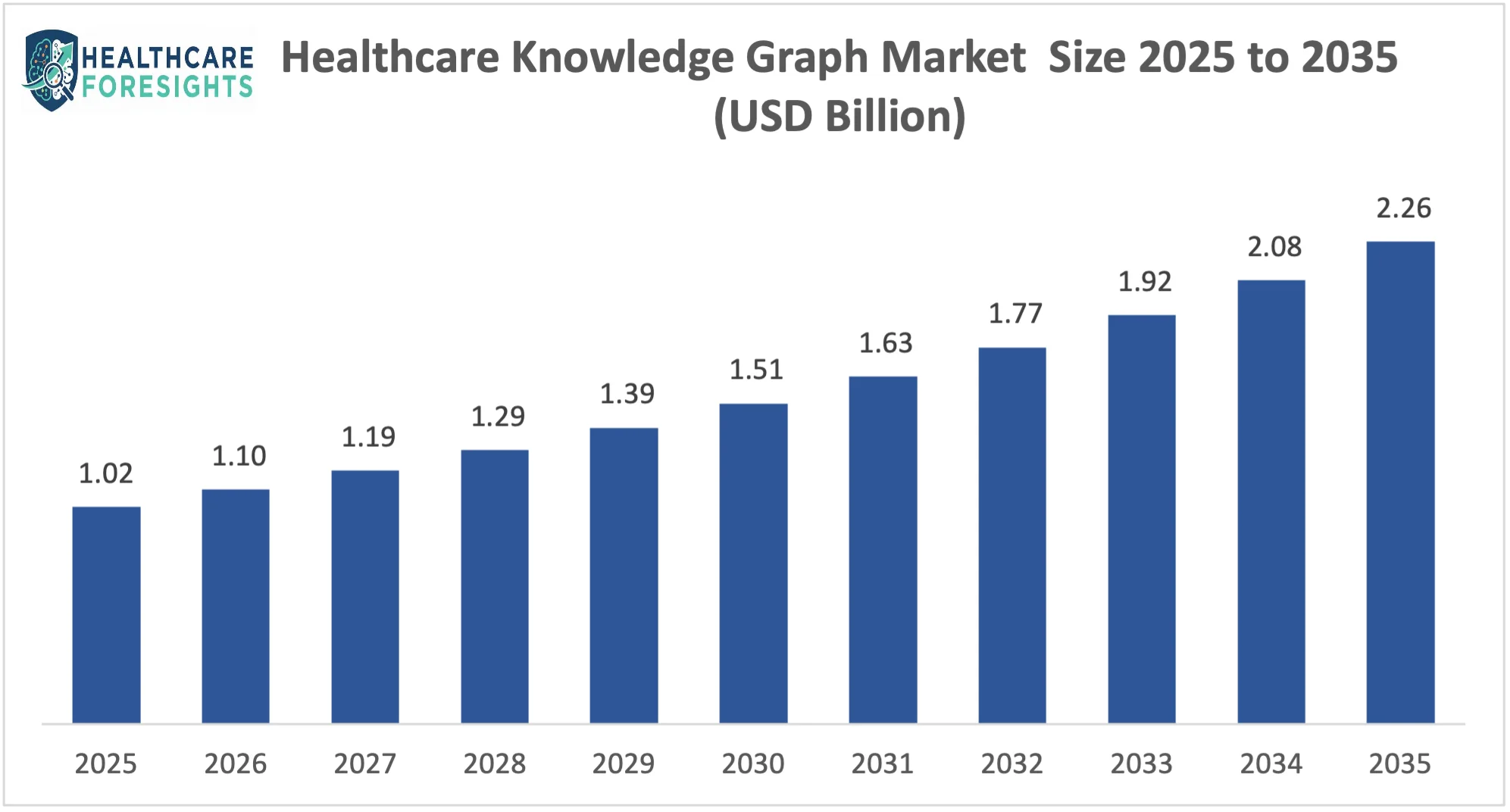
continueThe healthcare knowledge graph market size was valued at USD 1.10 billion in 2026 and is anticipated to reach USD 2.26 billion by 2035 with a compound annual growth rate of 8.3% from 2026 to 2035. North America is expected to contribute nearly 41.67% of the total market share of the global healthcare knowledge graph market in 2025, owing to the adoption of AI-powered clinical decision support systems, healthcare interoperability initiatives, and semantic data integration in hospitals, life sciences firms and research institutions.
Key drivers in North America include sophisticated digital healthcare infrastructure, wide adoption of EHR, strong investments in biomedical informatics and increased adoption of graph databases & semantic technologies to link clinical, pharmaceutical, genomic & real-world healthcare information.
Key players are also strengthening their partnerships with academic research institutions, pharmaceutical firms, cloud tech vendors, and healthcare providers to develop healthcare knowledge graph platforms for precision medicine, drug discovery and clinical research applications. Government initiatives supporting healthcare data interoperability, growing uptake of artificial intelligence & generative AI, massive investments in precision medicine and demand for integrated decision-making in healthcare further reinforce North America's supremacy.
Market Highlight
The clinical knowledge graphs segment held a 34.28% share of the global healthcare knowledge graph market in 2025, attributable to a rising trend in the adoption of semantic data integration platforms linking EHRs, clinical guidelines, laboratory results, medical imaging, medications, and patient records to assist clinical decision support, personalized treatment, healthcare interoperability, and healthcare analytics fueled by AI in hospitals and healthcare systems.
Cloud deployment held nearly 64.82% of the market, which made it a dominant deployment mode, thanks to scalable computing power, lower setup expenses, straightforward integration with health information systems, cloud-native graph databases, and the capability of underpinning AI-driven healthcare analytics and biomedical analysis in distributed healthcare organizations in real time, along with the management of healthcare data across an organization’s network.
Clinical Knowledge Graphs occupied about 34.28% of the share of the knowledge graph types, and they contributed to the healthcare knowledge graph market due to the integration of various kinds of data about diseases, patients, genes, and treatments in knowledge graphs.
Graph Databases contributed nearly 31.76% of the market size share under technology segments. Graph databases support efficient storage, querying and analysis of complex, highly connected data on patients, diseases, genetic variations, and drugs to discover new relationships for enhanced clinical decision-making and research in the healthcare industry and life sciences.
The North American region contributed a dominant share (nearly 41.25%) in the global Healthcare Knowledge Graph market size in 2025, with factors including the increasing pace of healthcare digitalization and AI integration, robust investment in biomedical and precision medicine research, a highly developed cloud computing ecosystem and the supportive government policies to promote interoperability in the healthcare industry.
Significant Growth Factors
Increasing Use of AI-Enabled Clinical Knowledge Management and Health Data Integration: Growing adoption of Healthcare Knowledge Graph platforms to link disparate clinical, operational, genomic, pharmaceutical, and research information into a comprehensive semantic fabric is fueling market expansion. By interconnecting patient records from EHR, LIS, and radiology systems, alongside clinical guidance, biomedical literature, drug knowledge, and RWE, knowledge graphs unlock data-driven insights, enhance contextual understanding, and support evidence-based care decisions. The increasing adoption of standards such as HL7 FHIR, SNOMED CT, ICD-10, LOINC, and RxNorm facilitates deeper semantic interoperability throughout the healthcare landscape, and as healthcare providers accelerate digital transformations, interest in knowledge graphs to improve care coordination, clinical decision support, and health analytics continues to accelerate among hospitals, health systems and research institutions.
Growing Applications in Precision Medicine, Drug Discovery and Biomedical Research: Accelerated investment in precision medicine, biomedical research, and AI is contributing to the adoption of healthcare knowledge graph technologies across life science and healthcare entities. The application of graph database solutions for linking genes, proteins, drugs, diseases, biomarkers, clinical trial data, molecular pathways, and publications into deeply interconnected knowledge networks has proven critical to drug development and biomedical research. Organizations are increasingly utilizing the knowledge graph approach for target identification, biomarker discovery, drug repurposing, pharmacovigilance, and optimizing clinical trial operations while identifying previously unidentified relationships within biological systems via AI. GNNs, LLMs, and Gen AI integrated with knowledge graphs, together with open-access research and extensive cloud-based data analytics, continue to improve acceptance.
Drivers Impact Analysis
Impact Factor | Estimated CAGR Impact | Regional Relevance | Market Impact |
Growing adoption of AI-driven clinical decision support and semantic healthcare intelligence | +3.1% | North America, Europe, Asia Pacific | Accelerates deployment of healthcare knowledge graphs for evidence-based diagnosis, treatment recommendations, and clinical workflow optimization |
Increasing implementation of healthcare interoperability standards and integrated electronic health records (EHRs) | +2.7% | North America, Europe, Asia Pacific | Enables seamless integration of heterogeneous healthcare datasets, improving semantic data exchange and longitudinal patient insights |
Rising investments in precision medicine, biomedical research, and real-world evidence (RWE) platforms | +2.4% | North America, Europe | Expands adoption of knowledge graphs for biomarker discovery, drug target identification, clinical research, and personalized healthcare |
Expanding integration of generative AI, graph neural networks (GNNs), and graph analytics | +2.0% | North America, Asia Pacific, Europe | Enhances semantic reasoning, relationship discovery, predictive analytics, and AI-powered knowledge extraction from complex biomedical data |
Government initiatives promoting digital health transformation and standardized health data exchange | +1.6% | Europe, North America, Asia Pacific | Encourages implementation of knowledge graph technologies through interoperability regulations, national digital health programs, and healthcare modernization initiatives |
Restraints Impact Analysis
Impact Factor | Estimated CAGR Impact | Regional Relevance | Market Impact |
High implementation costs associated with enterprise knowledge graph platforms and data integration | -2.4% | Emerging Markets, Global | Restricts adoption among small and mid-sized healthcare organizations due to significant deployment and maintenance costs |
Data privacy, cybersecurity, and regulatory compliance challenges | -2.0% | Global | Limits secure integration and sharing of sensitive clinical, genomic, and patient information across interconnected healthcare ecosystems |
Lack of standardized clinical ontologies and semantic interoperability across healthcare systems | -1.7% | Global | Creates inconsistencies in knowledge representation, reducing interoperability and limiting large-scale deployment |
Shortage of professionals with expertise in semantic technologies, biomedical informatics, and graph AI | -1.4% | Asia Pacific, Latin America, Middle East & Africa | Slows implementation, customization, and optimization of healthcare knowledge graph solutions |
Limited availability of high-quality, structured, and interoperable healthcare datasets | -1.2% | Global | Reduces the accuracy of AI-driven reasoning, knowledge discovery, and clinical decision support built on healthcare knowledge graphs |
What are the major advances changing the healthcare knowledge graph market today?
Semantic AI & Graph Intelligence – Driving Healthcare Clinical Decision-Making in the Enterprise
Healthcare knowledge graphs are maturing from data repositories to intelligent semantic platforms capable of connecting and reasoning over heterogeneous healthcare entities, including patients, diseases, symptoms, medications, lab results, clinical guidelines, genes, biomarkers and scientific literature.
New advancements in graph databases, graph neural networks (GNNs), semantic reasoning, and generative AI are empowering knowledge graphs to uncover latent clinical relationships, derive new inferences, and facilitate data-driven decision making, leading to improvements in diagnosis support, treatment selection, and risk stratifying patients and enabling improved care coordination, while simultaneously removing information silos throughout the healthcare organization. As hospitals embrace AI-driven clinical decision support tools, the underlying healthcare knowledge graph has become a critical component for a future of truly intelligent healthcare delivery.
Integration with Interoperable Healthcare Data Ecosystems – Enabling Seamless Data Connectivity
Healthcare organizations are increasingly integrating their healthcare knowledge graphs with enterprise digital health solutions to create a unified and holistic view of fragmented clinical, operational, and research data. Innovative knowledge graph solutions leverage a rich graph schema to integrate information sources such as EHRs, LIS, RIS, pharmacy systems, genomics data, clinical registries, medical wearables, and biomedical literature into a semantically unified data foundation. Leveraging standards such as HL7 FHIR, SNOMED CT, ICD-10, LOINC and RxNorm, healthcare enterprises can seamlessly integrate disparate data sources, enable rapid real-time access to clinical knowledge and collaborate across institutions.
Such integrations facilitate improved clinical workflows, strengthen healthcare analytics, enable tighter regulatory compliance and empower providers to extract valuable, actionable insights from a complex, multi-source medical data landscape.
AI – Powering Drug Discovery, Precision Medicine and Biomedical Research – Fueling Healthcare Innovation
Healthcare knowledge graphs are becoming central to drug discovery, precision medicine, and biomedical research due to their ability to integrate genes, proteins, biological pathways, diseases, drug compounds, clinical trials, and real-world evidence into a unified knowledge network. Leveraging the large language models (LLMs), graph analytics, and predictive AI, knowledge graphs can assist in the discovery of new therapeutic targets, enable biomarker detection, support drug repurposing, facilitate drug trial design optimization, and improve pharmacovigilance.
The expanding availability of genomics and multi-omics data further amplifies knowledge graph capabilities in support of precision medicine initiatives and translational research efforts. The pharmaceutical and biotech companies, academic institutions, and leading healthcare organizations are investing heavily in knowledge graph-enabled platforms to drive a more personalized and data-driven future of healthcare innovation.
Category Wise Insights
By Type of Knowledge Graph
How Clinical Knowledge Graphs Dominates the market?
Clinical Knowledge Graphs account for an approximate value share of 34.28% in the global Healthcare Knowledge Graph market in 2025 and dominate the types of knowledge graphs being utilized due to their massive application in the healthcare sector-especially in hospitals, health systems, and clinical decision support systems. Clinical knowledge graphs connect patients’ medical history, symptoms, diagnoses, drugs, lab tests, medical imaging, and clinical practices to build complex networks enabling evidence-based patient diagnosis, therapy planning and personalized patient treatment.
They play a major role in improving inter-operability, accelerating AI driven clinical decisions and driving analysis over large volumes of health data thereby witnessing a tremendous uptake amongst the healthcare providers. Investments made towards the transformation of healthcare with the integration of digital technologies, precision medicine and smart clinical processes have further strengthened the position of the clinical knowledge graph type to a greater extent.
By Deployment Mode
Why Does Cloud Deployment Lead the Market?
The Cloud segment constituted approximately 64.82% of the global Healthcare Knowledge Graph market in 2025, powered by increasing requirements for scalability, hospital-wide data integration and AI-driven analytic platforms. Cloud-based healthcare knowledge graph solutions allow organizations in the healthcare sector, the pharmaceutical sector and the research sector to integrate and analyse massive amounts of unstructured and structured clinical, genetic, drug, and research data.
Cloud-based deployment helps to integrate well with EHRs, lab systems, biological databases and applications utilising AI. It reduces IT infrastructure expenses while enabling collaboration of disparate healthcare entities. Continuous investment in Software-as-a-Service (SaaS), cloud-native graph database and generative AI solutions is strengthening this market.
By Technology
Why Do Graph Databases Lead the Market?
Graph databases constitute about 31.76% of the global healthcare knowledge graph market share in 2025 because they are indispensable for storing, managing, and querying connected healthcare data. Unlike traditional databases, graph databases are used to model complex relationships among patients, diseases, genes, drugs, biomarkers, clinical trials, healthcare facilities, research articles and other related data, which assists in performing semantically efficient searches and relationships-based analysis.
Real-time graph traversal capabilities and their potential to empower AI-based knowledge discovery, semantic reasoning and scalable analytics are enabling demand in this segment, particularly driven by trends such as precision medicine, biomedical research, drug discovery and AI-driven clinical decision support systems.
Report Scope
Feature of the Report | Details |
Market Size in 2026 | USD 1.10 billion |
Projected Market Size in 2035 | USD 2.26 billion |
Market Size in 2025 | USD 1.02 billion |
CAGR Growth Rate | 8.3% CAGR |
Base Year | 2025 |
Forecast Period | 2026-2035 |
Key Segment | By Knowledge Graph Type, Deployment Mode, Technology and Region |
Report Coverage | Revenue Estimation and Forecast, Company Profile, Competitive Landscape, Growth Factors and Recent Trends |
Regional Scope | North America, Europe, Asia Pacific, Middle East & Africa, and South & Central America |
Buying Options | Request tailored purchasing options to fulfil your requirements for research. |
Regional Analysis
How Big is the North America Market Size?
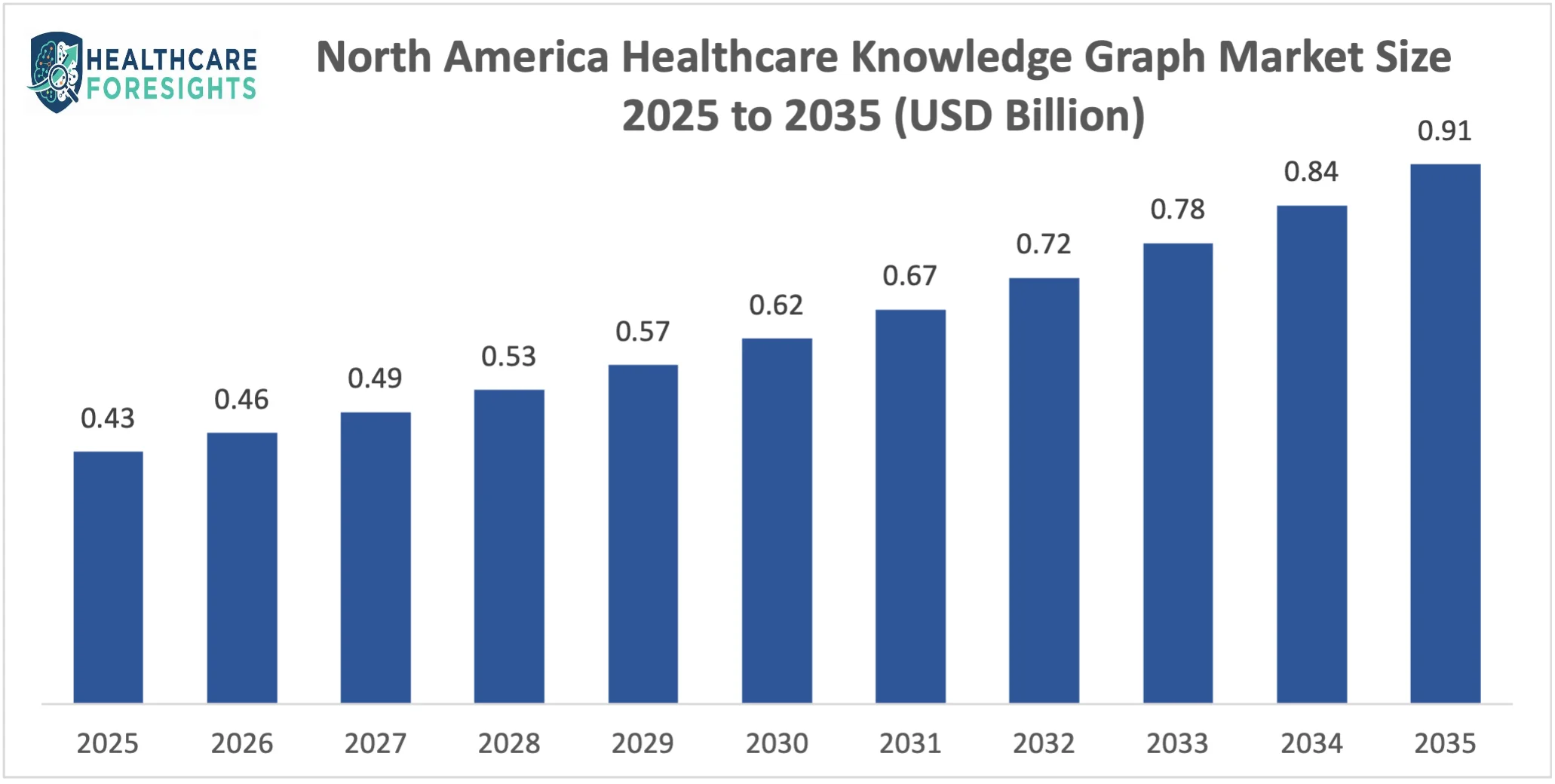
The North America Healthcare Knowledge Graph market size is forecast to reach USD 0.43 billion by 2025 and is expected to reach around USD 0.91 billion by 2035 with a CAGR of 7.92% from 2026 to 2035.
Why Did North America Dominate the Market in 2025?
North America held around 40.86% market share in the global Healthcare Knowledge Graph market in 2025, driven by a sophisticated digital healthcare ecosystem, rampant adoption of EHRs, and high investment in AI, biomedical informatics, and precision medicine. North America is led by the US market due to widespread adoption of EHR interoperability standards, semantic technologies, graph databases and AI-powered clinical decision support solutions in hospitals, pharmaceutical companies, research institutions and healthcare IT companies.
The region’s leading cloud service providers, enterprise software vendors, and life sciences companies, in conjunction with strong government funding in AI and biomedical research, continues to drive the market forward. Collaborative initiatives among pharmaceutical firms, academic institutions, technology vendors and healthcare organizations continue to fuel its growth.
Why is Asia Pacific an Important and Growing Market?
The Asia Pacific Healthcare Knowledge Graph market is expected to grow at the fastest rate of CAGR from 2024 to 2035 owing to the burgeoning digital transformation of healthcare, the rise in adoption of artificial intelligence and increasing investments in biomedical research and precision medicine. Countries such as China, Japan, India, South Korea, Singapore and Australia are expanding national digital health ecosystems and adoption of electronic health records, healthcare interoperability and AI enabled clinical analytics.
Asia Pacific is seeing increasing investments in pharmaceutical R&D, genomics research and cloud-based healthcare platforms, which are becoming more reliant on semantic knowledge management and graph technologies. Rising government focus on promoting digital healthcare and increased collaboration between technology firms and healthcare stakeholders are key drivers for the growth of the Healthcare Knowledge Graph market.
Why is Europe a Strategically Important Market?
Europe is a developed and innovative market for healthcare knowledge graphs, powered by robust healthcare systems, excellent biomedical research infrastructure and a focus on precision medicine and evidence-based healthcare. Countries like Germany, the UK, France, the Netherlands, Switzerland, Italy and Nordic countries continue investing heavily in semantic health data platforms, AI driven clinical decision support systems, clinical trials, and precision medicine projects.
Integration of graph technology with clinical, genomic, and pharmaceutical data is enhancing decision making and medical research. Strong emphasis on clinical terminologies and data interoperability further supports the growth of this region.
Why is Latin America Emerging as a Growth Opportunity?
Latin America represents an emerging opportunity, given continued growth and adoption of the digital healthcare solutions across the region, particularly in areas like the electronic health records and cloud-based digital health platforms. Countries such as Brazil, Mexico, Argentina, Chile and Colombia continue investing in expanding digital health infrastructures and digitalizing healthcare.
Increased involvement in clinical research activities, growing pharmaceutical investments, and increased healthcare data utilization in decision-making processes continue to drive adoption of healthcare knowledge graph solutions.
Why is the Middle East & Africa an Emerging Market?
The Middle East & Africa Healthcare Knowledge Graph market continues to experience gradual growth owing to the ongoing digital health initiatives taken up by the governments and increasing adoption of AI in the healthcare industry. Countries including Saudi Arabia, the United Arab Emirates (UAE), Qatar, Israel and South Africa are investing in developing national digital health systems and healthcare facilities, which involves increasing deployment of healthcare knowledge graphs. While the market is in nascent stages compared to developed regions, increasing investments in digital health transformation and rapid digital initiatives will lead to growth in the long run.
Key Market Players
Neo4j Inc.
Elsevier B.V.
Wolters Kluwer N.V.
Stardog Union Inc.
Ontotext (Progress Software)
Cambridge Semantics Inc.
Franz Inc.
Semantic Web Company GmbH
IQVIA Holdings Inc.
Clarivate Plc.
Others
Key Developments
The market saw robust developments with increased production activity as players ramped up efforts to commercialize bio-isobutanol, further develop derivative product portfolios, and cater to an increase in the overall demand across paints, coatings, and fuel applications in recent years.
June 2025 - Elsevier B.V. launched enhanced AI-powered knowledge graph solutions integrated with the biomedical literature, clinical evidence, genomic data, and real-world data, aiming to bolster drug discovery, clinical research, and evidence-based healthcare decisions through their life science intelligence platform, further boosting growth.
April 2025 - Neo4j, Inc. Enhanced its enterprise graph database platform with a range of enterprise features in GraphRAG (Graph Retrieval-Augmented Generation) with native generative AI to assist organizations in healthcare in constructing scalable healthcare knowledge graphs for clinical decision support, semantic search, integration of patient data, and biomedical knowledge exploration.
The Healthcare Knowledge Graph Market is segmented as follows:
By Knowledge Graph Type
Clinical Knowledge Graphs
Biomedical Knowledge Graphs
Pharmaceutical Knowledge Graphs
Genomic & Precision Medicine Knowledge Graphs
Healthcare Enterprise Knowledge Graphs
Research & Scientific Knowledge Graphs
By Deployment Mode
Cloud
On-premises
Hybrid
By Technology
Graph Databases
Semantic Web Technologies (RDF, OWL, SPARQL)
Graph Neural Networks (GNNs)
Natural Language Processing (NLP)
Large Language Models (LLMs) Integration
Knowledge Representation & Reasoning
Retrieval-Augmented Generation (GraphRAG)
Regional Coverage:
North America
U.S.
Canada
Mexico
Rest of North America
Europe
Germany
France
U.K.
Russia
Italy
Spain
Netherlands
Rest of Europe
Asia Pacific
China
Japan
India
New Zealand
Australia
South Korea
Taiwan
Rest of Asia Pacific
The Middle East & Africa
Saudi Arabia
UAE
Egypt
Kuwait
South Africa
Rest of the Middle East & Africa
Latin America
Brazil
Argentina
Rest of Latin America
Competitive Landscape
The market is characterized by intense competition among established players and emerging companies. Strategic partnerships, mergers and acquisitions, and product innovation are key strategies employed by market participants.
Key Market Players
Oracle Corporation
Neo4j Inc.
Elsevier B.V.
Wolters Kluwer N.V.
Microsoft Corporation
Amazon Web Services (AWS)
Google LLC
IBM Corporation
Stardog Union Inc.
Ontotext (Progress Software)
Cambridge Semantics Inc.
Franz Inc.
Semantic Web Company GmbH
IQVIA Holdings Inc.
Clarivate Plc.
Others
Meet the Team
This report was prepared by our expert analysts with deep industry knowledge and research experience.

Founded by Nitin Sirsat, Healthcare Foresights is built on a vision to help healthcare organizations make informed decisions through research-driven intelligence, market insights, and strategic support. With over 12 years of experience in market research, business consulting, and knowledge services, Nitin Sirsat has worked with organizations across global industries, helping them transform complex market information into actionable insights. Healthcare Foresights combines industry research, analytical expertise, and technology-enabled solutions to support healthcare companies, investors, and decision-makers in identifying opportunities and driving sustainable growth.