Cancer's still one of the leading causes of death worldwide. That hasn't changed. What has changed is how early we can actually catch it, and molecular diagnostics are most of the reason why. Catching cancer early isn't just a nice bonus, it reshapes the entire treatment path and genuinely improves the odds someone survives. Before getting into how that early detection actually works, it's worth pinning down what molecular diagnostics even means, since the term gets thrown around a lot.
At CMI Consulting, oncology diagnostics is one of the corners of healthcare we've spent real time in, mostly because it's growing fast and because it's solving something that's bugged cancer care for decades: catching disease before symptoms ever show up, not after.
What This Technology Actually Does
Molecular diagnostics are, at bottom, tools for reading biological markers across the genome and proteome. They detect disease, flag genetic predisposition, and help guide treatment decisions built around one specific patient rather than a generic playbook. Three technologies do most of the heavy lifting here, PCR, next-generation sequencing, and microarrays, and together they touch a lot more than just oncology. Infectious disease, genetic testing, and personalized medicine, all of it leans on the same underlying tools. What ties it together is precision, sharper diagnoses, treatment that's actually tailored, and better outcomes downstream.
Why Catching It Early Actually Matters
Cancer diagnosis used to lean almost entirely on imaging and histopathology. Useful tools, no argument there, but they tend to find cancer later than you'd want, usually after symptoms have already shown up and the disease has had time to progress. Molecular diagnostics push that timeline back, sometimes catching cancer before a patient notices anything's wrong at all. Earlier detection means catching disease while it's still genuinely treatable. That's the whole ballgame, really, better prognosis, meaning significantly higher odds of survival.
The Actual Tools Doing the Work
A handful of specific techniques are driving most of the progress here, and they work pretty differently from each other.
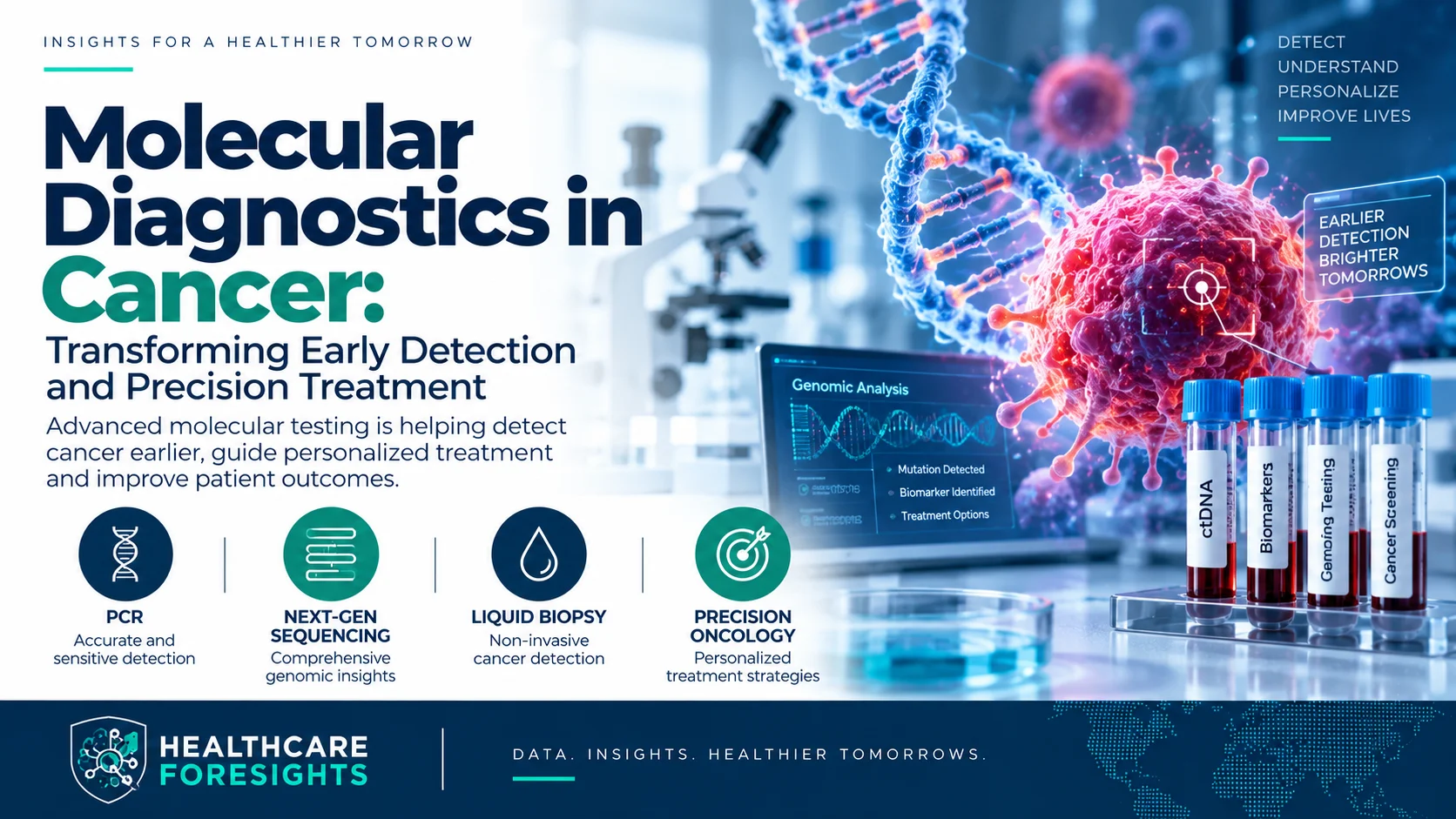
PCR, polymerase chain reaction, takes tiny amounts of DNA or RNA and amplifies them up to detectable levels. qPCR, RT-PCR, and loop-mediated isothermal amplification are all variations on the same core idea. In cancer specifically, PCR can zero in on the genetic mutations or chromosomal rearrangements tied to a particular cancer type.
Next-generation sequencing changed the game more than almost anything else in this space. It gives a comprehensive genomic picture, whether that's an entire genome or one targeted region, and it catches a genuinely wide range of alterations, point mutations, insertions, deletions, and copy number changes. It's found real traction in diagnosing breast and ovarian cancer in particular.
Liquid biopsy might be the most popular non-invasive option right now, built around detecting circulating tumor DNA. What makes it appealing isn't complicated, real-time insight into a tumor's molecular makeup from something as simple as a blood draw, no invasive tissue biopsy required.
Microarrays let researchers look at thousands of genes at once, which is genuinely useful for spotting expression patterns and gene signatures tied to prognosis. Microarray data can, for example, help estimate how likely breast cancer is to come back, which directly shapes treatment decisions.
Why This Actually Beats the Old Way
A few things stand out. Accuracy improves noticeably, targeting specific biomarkers directly cuts down on misdiagnosis in a way older methods just couldn't match. Treatment gets genuinely personal too, diagnosing at the genetic level lets oncologists build care around a patient's actual biology instead of a generic protocol. And a lot of these tools are minimally invasive compared to traditional tissue biopsies, which matters more to patients than people sometimes give it credit for, less discomfort, less risk, and the same or better information.
What's Actually Slowing This Down
Growth here has been real, no question, driven by broader progress across diagnostics and rising awareness about catching cancer early. But it's not a smooth road.
Regulation is genuinely demanding. Clearing FDA approval or CE marking takes real time, real money, and expertise that not every company has sitting around. Cost is another wall a lot of companies run into, advanced diagnostic tests carry a real price tag, and that limits who can actually access them, especially in lower-income regions where every dollar counts more. Then there's data. Making sense of the genetic information these tests generate takes serious bioinformatics chops, get it wrong and you're looking at false positives or false negatives, neither of which is acceptable in oncology. On top of that, protecting sensitive genetic data demands real cybersecurity investment, not an afterthought bolted on later.
Where This Is Actually Headed
Even with those hurdles, momentum keeps building. Partnerships between diagnostics companies, testing centers, and research institutions are speeding up both innovation and how fast new technology actually reaches patients. AI and machine learning are proving to be a genuinely powerful addition too, giving the field real tools for making sense of the enormous datasets these tests produce. Recent research suggests AI can already analyze genomic data well enough to help predict cancer risk, flag potential biomarkers, and even point toward optimal treatment strategies.
Our take at CMI Consulting is that this combination, sharper diagnostic technology paired with AI doing the heavy interpretive lifting, is what keeps pushing this field forward. The companies that manage to pair real clinical accuracy with pricing people can actually afford and data security that actually holds up are the ones we'd expect to lead as oncology molecular diagnostics becomes a more central part of how cancer gets caught and treated going forward.