In vitro diagnostics exist to do one core thing well: detect health conditions using samples like blood, tissue, or urine, without needing to go inside the body to get an answer. These tests help diagnose disease, track how a treatment's actually working, screen for conditions before symptoms show up, and catch problems early enough that they're easier to treat. The process itself is fairly straightforward on paper, a specimen gets collected, sent to a lab, and run through whatever diagnostic technique fits the test, and the results land back with a doctor who can actually use them to make a real treatment decision.
IVD has gotten a lot more attention since COVID-19, and for good reason. At CMI Consulting, we've been tracking this space closely, and we think a SWOT framework is a genuinely useful way to make sense of where the market stands and where it's headed. Here's how we'd break it down.
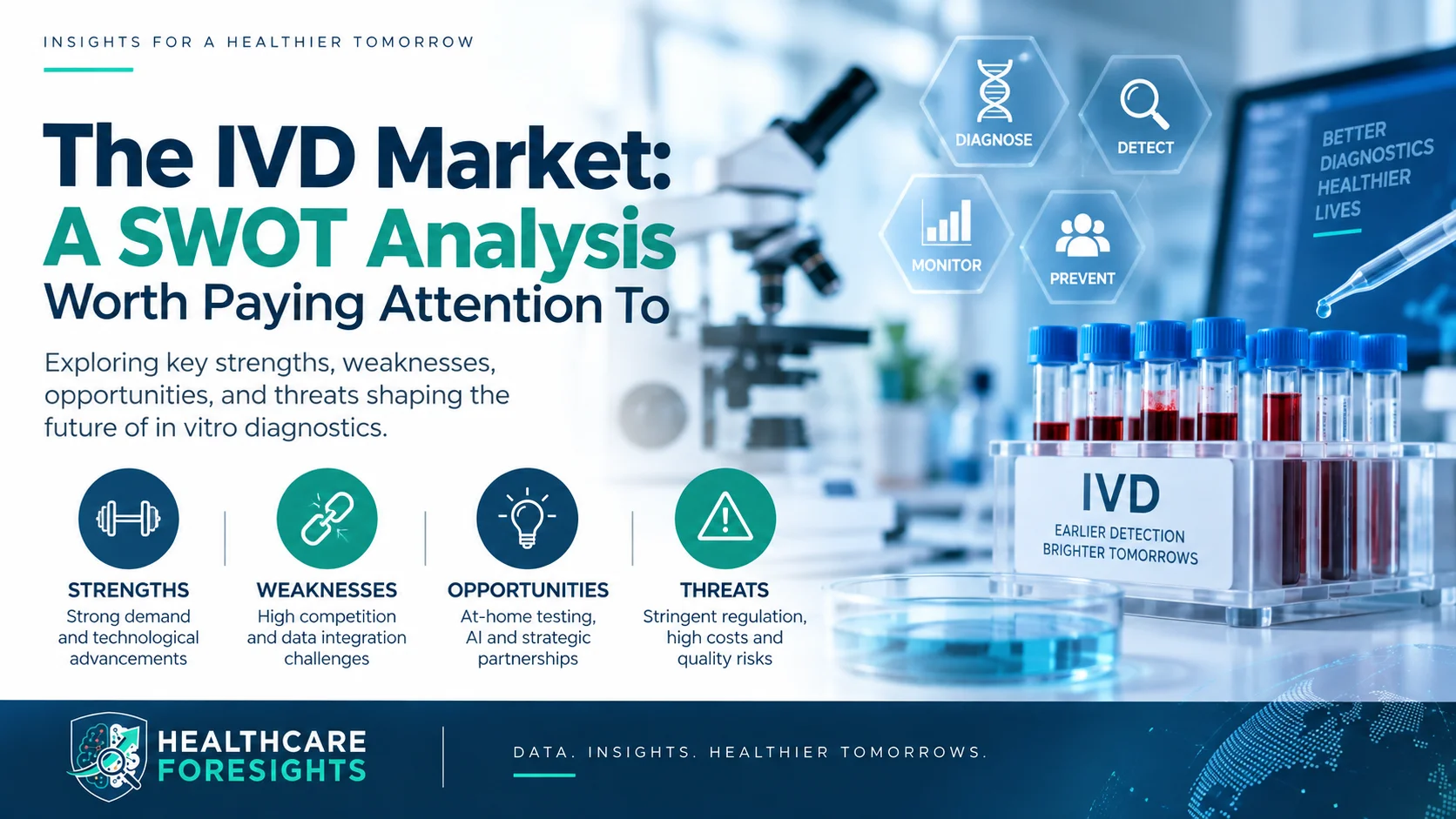
Strengths
Chronic and infectious diseases keep climbing. Cancer, COVID-19, and a long list of other conditions have driven real demand for diagnostic testing and services. That demand is likely to keep fueling growth across diagnostic tests, biomarker assays, and molecular diagnostics for years to come.
The technology keeps getting better. Next-generation sequencing and digital pathology have become genuine drivers of this market's growth, mostly because they make diagnosis faster and more accurate, giving healthcare providers better information to work with when it actually matters.
Healthcare spending keeps rising. Global healthcare expenditure crossed roughly $10 trillion in 2021, and that broader spending trend has directly benefited the IVD market as both demand and investment capacity keep growing alongside it.
Weaknesses
Competition is fierce. The IVD space is crowded with well-established, deep-pocketed companies, which means smaller or newer players have to work considerably harder to differentiate themselves and keep innovating just to stay relevant.
Skilled staff are hard to find. Technology in this field moves fast, and that pace creates a constant need for ongoing training. Making sure staff can actually operate new equipment correctly and interpret results accurately isn't optional, it's essential for patient safety, but it's also a genuine operational burden.
Data integration is a real headache. Pulling in outside data sources, patient records, genomic data, and real-world outcomes requires serious data infrastructure and cybersecurity investment to keep everything private, secure, and compliant. That's expensive and technically demanding work that doesn't always get the attention it deserves.
Opportunities
At-home and point-of-care testing are expanding fast. These solutions cut turnaround time dramatically and let people get answers and make decisions faster, which is exactly the kind of convenience that's driving real demand for more innovative diagnostic options.
Data analytics is opening new doors. Advances in AI and analytics are making it possible to actually extract useful insight from the huge datasets IVD testing generates, supporting more accurate diagnosis, better treatment selection, and genuinely personalized medicine approaches that weren't practical even a few years back.
Partnerships are accelerating innovation. Collaboration between manufacturers, diagnostic centers, and research institutions is helping spread expertise around and speed up how quickly new diagnostic technology actually reaches the market. Nobody in this space is winning entirely on their own anymore.
Threats
Regulation is genuinely tough. IVD products have to clear demanding frameworks like FDA approval and CE marking, and meeting those requirements takes serious time, money, and specialized expertise that not every company has in-house.
The capital requirements are steep. Setting up IVD facilities isn't cheap, and the instruments required to actually run these tests tend to carry a high price tag on top of the resources needed to navigate regulatory approval in the first place.
Quality control issues carry real risk. Inconsistent test quality can lead to unreliable results, and false positives or false negatives aren't just inconvenient, they can genuinely harm patients. Problems like this limit how widely certain products get adopted, since trust matters enormously in diagnostics specifically.
Where This Leaves the Market
Even with real challenges on the weakness and threat side, plenty of factors are still pushing this market forward. Partnerships between manufacturers, diagnostic centers, and research institutions keep accelerating innovation and helping new technology reach patients faster. At-home and point-of-care testing continues expanding the overall market too, driven by the same appeal that's fueling most of healthcare's shift toward convenience: faster answers and quicker decisions.
Our take at CMI Consulting is that the IVD market's fundamentals remain genuinely strong, but the companies that actually win here will be the ones that manage regulatory complexity well, invest seriously in staff training and data infrastructure, and keep innovating fast enough to stay ahead of an increasingly crowded competitive field.