
Idiopathic Pulmonary Fibrosis (IPF) is one of the diseases that has doctors most stumped. Even though years of study have led to big steps forward in understanding the disease, people who have been labeled with IPF still have few treatment choices and an uncertain outlook. It's true that current treatments have made it easier to deal with diseases, but they haven't really changed how the diseases progressed like many doctors had hoped.
That's one reason why people are still interested in the IPF treatment market. Even though there have been some high-profile failures over the years, pharmaceutical companies are still putting a lot of money into fibrosis research, venture capitalists are still pouring money into potential biotechnology companies, and trial pipelines are still busy.
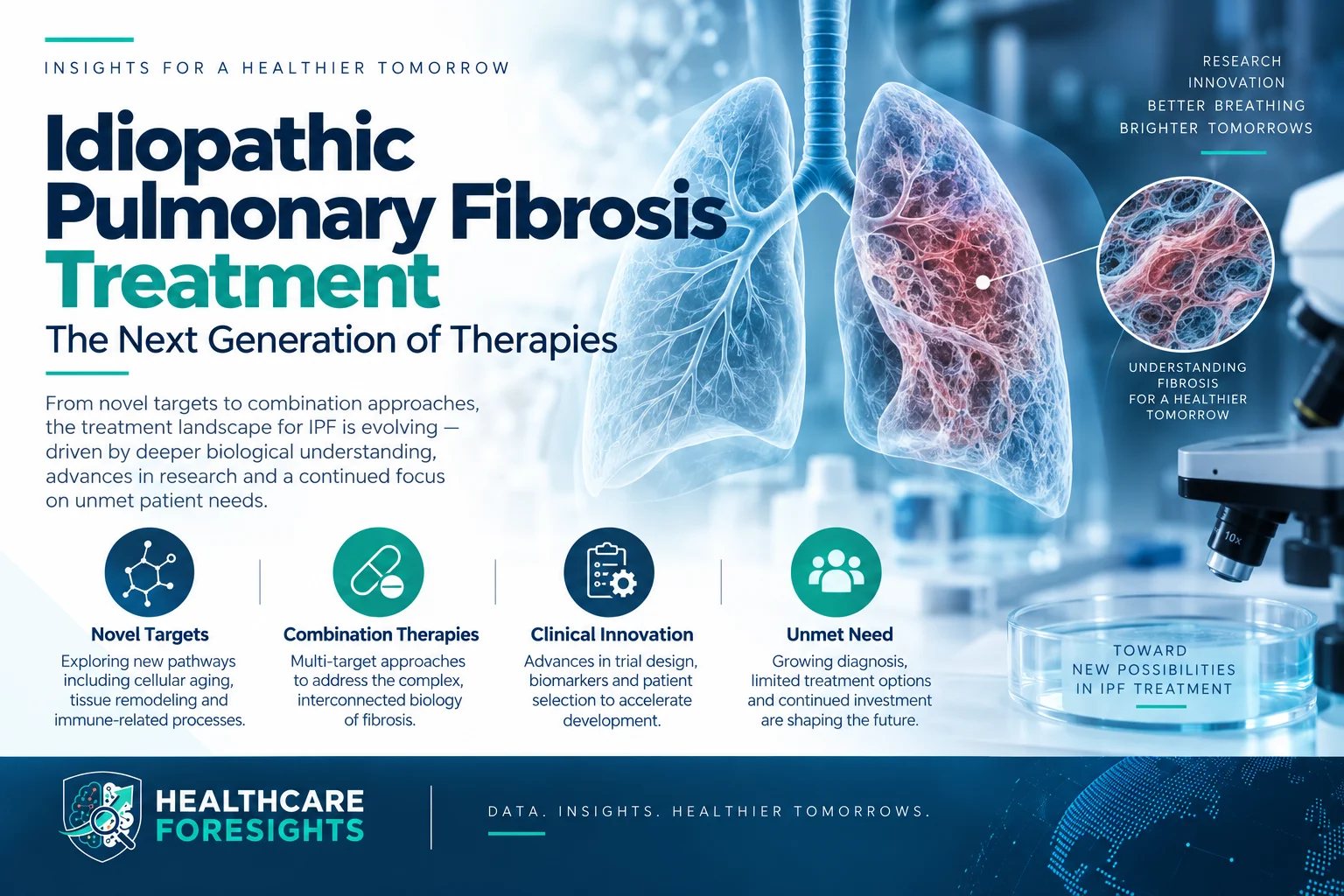
The market feels different now than it did ten years ago in many ways.
Pirfenidone and nintedanib were big steps forward when they came out on the market. For the first time, doctors had treatments that could slow the loss of lung function in a disease that had not previously had many treatment choices. But the excitement about these treatments was quickly tempered by the facts. Patients' diseases kept getting worse, some people were still having problems with the side effects, and neither medicine was able to fix them.
That fact still affects the goals of study today.
Instead of making a new form of an antifibrotic drug that is already on the market, many companies are working on completely different molecular processes. Some are going after the cellular age. Others are looking into proteins that play a role in tissue change or immune-related processes. Stopping the processes that cause fibrosis in the first place is becoming more important than just taking care of the signs.
When you look at the market, this change is big. It seems like the industry is moving beyond small improvements and starting to look into new ideas that might change the way treatments are given in the future.
Without a doubt, making drugs for IPF has never been easy.
Several candidates that got a lot of attention in early studies didn't do as well in bigger clinical trials as expected. This trend is well known to investors and people who follow the business. It's not always true that good Phase II data leads to business success. Still, these mistakes have taught us a lot about how diseases work and helped make future studies better.
More and more people are interested in combination treatment, which is one of the more interesting new trends. More and more people are realizing that fibrosis is not caused by a single route. Instead, it grows through a web of cellular processes that work together. If that idea turns out to be right, treatment plans in the future might be very different from what we do now.
Researchers are already looking into whether using more than one therapy with different processes together can lead to better results than using just one therapy. Even though it's still early, the method has gotten a lot of attention because it has worked well in other treatment areas, like cancer and infectious disease.
Besides the science, there is a strong business case for continuing to spend. The IPF business is still pretty narrow, but there is a big clinical need that isn't being met. The number of diagnoses is going up, healthcare workers are becoming more aware, and improvements in testing tools are making it easier to find patients earlier than ever.
These factors make a great chance for businesses that work in the lung and rare disease markets.
As pharmaceutical firms move new options through clinical testing, groups like CMI Consulting LLC continue to keep an eye on how fibrosis treatments are changing. As a number of experimental treatments get closer to important legal and clinical goals, the next few years could be very important.
We still don't know if these medicines will change the way people are treated in the long run. One thing that is clear is that the way people talk about IPF is changing. The goal is no longer just to slow the disease's growth. Researchers are wondering more and more if future therapies will be able to start working earlier, target disease processes more precisely, and produce results that were once thought to be impossible.
That change alone is interesting for a disease that has long been linked to few choices.