There was a time when advanced melanoma conversations felt much shorter and much harder. Treatment options were limited, outcomes were uncertain, and many physicians were left trying to manage a disease that could turn aggressive very quickly. A lot of clinicians who have been practicing for years still remember that phase clearly. That’s probably why the shift happening now feels so significant.
Over the last decade, especially with the growth of immunotherapy and targeted treatment approaches, melanoma care in the U.S. has changed in ways that would have sounded unrealistic years ago. Patients are living longer in many cases. Treatment paths are more personalized. And physicians have more flexibility than they once did.
But speaking with healthcare professionals today, it’s also obvious that things have not necessarily become simpler.
To understand what day-to-day melanoma management actually looks like now, Healthcare Foresights spoke with oncologists, dermatologists, and payers across the U.S. The discussions were less about headlines and more about reality — what doctors are seeing in clinics, where payers still hesitate, and how treatment decisions are actually being made.
And honestly, many of the conversations were more nuanced than expected.
Doctors Are No Longer Treating Every Patient the Same Way
One thing that came up repeatedly was how different melanoma care feels today compared to even five or six years ago.
Several physicians said they rarely think in terms of “standard treatment” anymore. Immunotherapies and targeted therapies have changed the conversation completely, especially for patients who once had very few realistic options.
But what stood out more was how individualized treatment decisions have become.
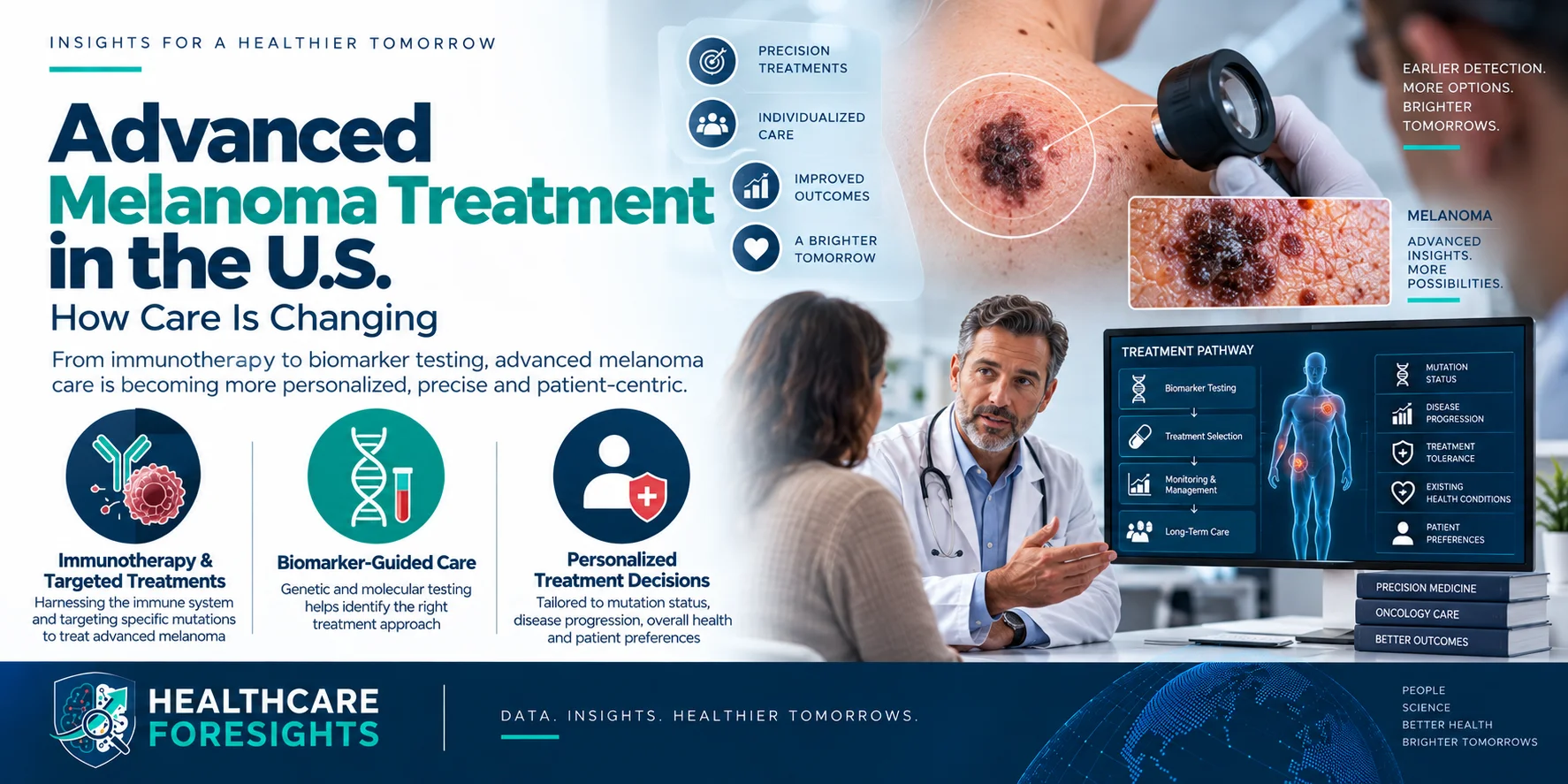
Doctors talked about balancing mutation status, disease progression, tolerance levels, existing health conditions, and patient preferences all at the same time. Two patients with similar diagnoses may still end up receiving very different treatment plans.
One oncologist summed it up in a pretty straightforward way during the discussion:
“The diagnosis might be similar. The treatment journey usually isn’t.”
That shift toward personalization came up again and again.
Biomarker Testing Is Now Part of the Everyday Conversation
A lot of physicians said biomarker testing has become almost impossible to separate from treatment planning now.
Earlier, discussions were often centered around what therapies were available broadly. Today, the focus is much more specific. Clinicians want to know which therapy actually fits the biology of the tumor sitting in front of them.
Doctors also mentioned that patients themselves are becoming more informed. Many come into appointments already familiar with immunotherapy terminology, mutation testing, or even clinical trial options.
That changes conversations too. Patients are asking more questions, comparing treatment paths, and wanting to understand trade-offs much earlier in the process.
More Options Have Also Created More Complexity
Interestingly, several clinicians admitted that having more therapies available has created its own kind of pressure.
Sequencing remains a major question in real-world practice. When should immunotherapy come first? When should targeted therapy enter the picture? What happens when resistance develops? And how much should toxicity concerns influence the order of treatment?
There are guidelines, of course. But multiple doctors said actual decision-making rarely feels as clean as it looks on paper.
Insurance approvals, patient response, side-effect management, and even logistical concerns can end up shaping the treatment path just as much as clinical trial data.
Patient Monitoring Has Become Far More Hands-On
Another thing physicians emphasized was how much more involved follow-up care has become.
Immune-related adverse events can escalate quickly if they are missed early. Because of that, melanoma management now often involves coordination between multiple teams instead of a single specialist working independently.
Doctors talked about staying in closer contact with patients, encouraging them to report symptoms early, and involving dermatologists, nursing teams, and primary care physicians more regularly than before.
In many ways, melanoma care feels more collaborative now than it once did.
Payers Are Looking Closely at Long-Term Value
The payer side of the conversations was equally interesting.
Most payers said they are generally aligned with clinicians on the importance of access to effective therapies. But at the same time, they are under pressure to justify long-term cost sustainability.
Several described formulary decisions as heavily dependent on evidence, particularly guideline alignment and long-term outcomes data.
Prior authorization still remains common, especially for high-cost therapies. Payers acknowledged that it can sometimes slow access, but they also argued that these processes are designed to make sure treatments are being used appropriately.
One trend that came up repeatedly was the growing importance of real-world evidence.
Clinical trial data still matters enormously, but payers increasingly want to understand how therapies perform outside tightly controlled studies. Long-term survival trends, adherence, toxicity management, and real-world durability are becoming more important in reimbursement discussions.
The Bigger Picture
What became clear from all these conversations is that melanoma care is no longer just about introducing new drugs.
The bigger challenge now is coordination.
How do clinicians, payers, researchers, and healthcare systems work together well enough to make innovative care actually accessible and sustainable over time?
That question sits underneath a lot of the discussions happening right now across oncology.
Healthcare advisory and research organizations, including firms like CMI Consulting LLC, are also seeing growing demand for insights that connect clinical realities with payer expectations and long-term patient outcomes in a more practical way.
Because at the end of the day, innovation only matters if it reaches patients in a meaningful and manageable way.
Looking Forward
Melanoma treatment has moved incredibly far in a relatively short period of time.
But listening to clinicians and payers today, it’s clear the conversation is no longer only about whether therapies work. It’s also about how they fit into real clinical practice, how patients experience them over time, and how healthcare systems support access without losing sustainability.
The science will keep evolving.
The harder part may be making sure the system around it evolves too.